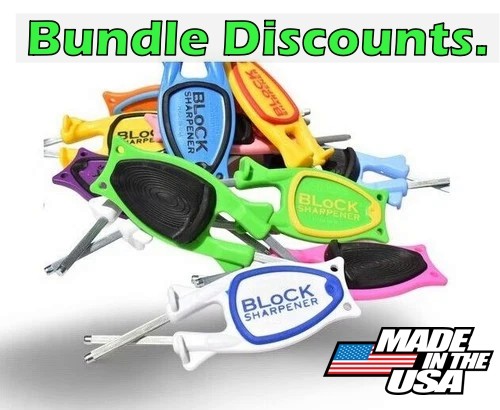
If you have ever been hesitant to use a pull-through sharpener for fear of ruining your expensive blades, you aren’t alone. Many sharpeners tear up metal and change the angle of your knife. However, Paul Block, the maker of the Block Knife Sharpener, is here to dispel those fears with a family invention that dates back to the 1970s.
Whether you are a home cook or an outdoorsman, here is why the Block Sharpener might be the best solution for keeping your tools razor-sharp in 2026.
The Secret is in the “Flex”
The biggest misconception about pull-through sharpeners is that they destroy blades. Paul Block explains that his sharpener uses a patented flex design. Instead of grinding your knife down, the rods flex to follow the original edge of your blade.
- Custom Angle Adaptation: The rods adjust to grab any edge between 17 and 28 degrees.
- Honing, Not Grinding: The rods squeeze the original edge back up, tightening it without leaving burns or metal “lips”.
- Durable Material: While his father and grandfather used 1060 steel, Paul has upgraded the pins to D2 steel, allowing you to sharpen high-end stainless steel (like 440) and hard tool steels without wearing out the sharpener.
How to Sharpen Serrated Knives (Yes, It’s Possible)
Most people assume that once a serrated bread knife or steak knife goes dull, it’s finished. Paul Block guarantees his sharpener works on any serrated knife, from fine Japanese serrations to the aggressive teeth on Spyderco or Benchmade knives.
The technique is unique: the sharpener creates a vibration that “chatters” up and down through the teeth. This action hits the entire serration—from the tip to the valley—making them sharper than brand new without damaging the teeth.
Versatility: From Scissors to Garden Tools
The Block Sharpener isn’t just for the kitchen. It features a non-slip rubber grip that allows you to sharpen awkward tools like meat scissors and garden clippers.
The Technique for Scissors:
- Butt the sharpener up in your fingers securely.
- Follow the edge of the blade until you see a fresh shine.
- Check for a “burr” on the flat side of the blade.
- Knock the burr off to square the corner, leaving you with a sharp cutting edge.
Pro Tip: The Leather Strop Finish
To take your knife from “sharp” to “shaving sharp,” Paul recommends one final step: stropping.
After using the Block Sharpener, run your blade against a piece of leather or cardboard. This polishes the edge. If you are out in the field without gear, Paul suggests you can even strop the blade on your heavy canvas pants (Carhartts) or carefully on the skin of your forearm. This extra step creates friction that polishes the blade, a trick that works wonders on both straight and serrated edges.
A Family Legacy with a Lifetime Guarantee
This isn’t just a gadget; it’s a family legacy. Paul’s father and grandfather started making these sharpeners in the 70s. Today, Paul stands by the product with a lifetime guarantee on the pins. If you manage to wear out the D2 steel rods—which is difficult to do—you can contact him via the website printed on the handle for a replacement set.
If your knives are dull, don’t throw them out. Give them the “flex” treatment and get back to slicing with ease.